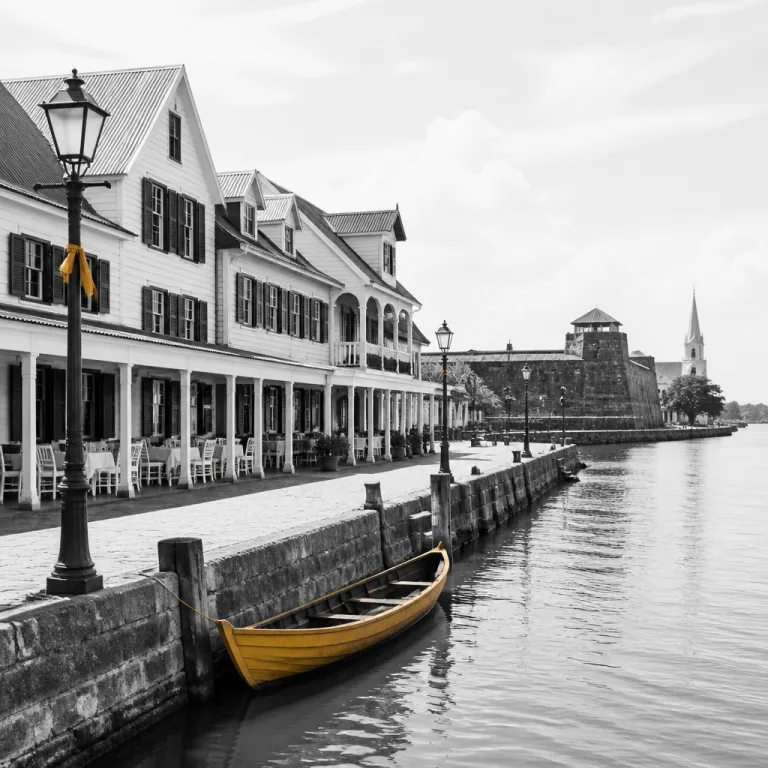
Staying close to the heart of Keti Koti in Paramaribo
On Keti Koti Suriname July week, location is your greatest luxury. When emancipation day ceremonies and the Bigi Spikri parade take place around Onafhankelijkheidsplein and the historic center, staying within walking distance lets you feel the rising energy from first light. Couples who choose riverside properties along the Suriname River move easily between quiet suites and streets filled with people in traditional koto dress, kaseko rhythms and the powerful image of broken chains everywhere.
Torarica Resort and Casino sits in a prime position for Keti Koti Suriname July stays, with gardens that buffer the sound yet keep you close to the festival routes. From here, you can stroll to the Waterkant in under ten minutes, passing colonial façades that speak softly about the history of slavery Suriname endured under the Dutch government and the wider Suriname Netherlands story. Courtyard by Marriott Paramaribo offers a more international style, but its river views and reliable service appeal to couples who want a familiar standard while they read about history slavery in Suriname and plan which koti festival events to attend that day.
Along the Waterkant and in the inner city, several refined guesthouses and premium apartments give a more intimate sense of suriname keti life. These smaller properties place you close to where the Bigi Spikri procession with decorated cars and dance keti troupes usually takes place, so you can step out just before the parade without long travel times. For a curated overview of luxury stays aligned with Keti Koti Suriname July travel, the guide on refined stays along the Suriname River helps you compare riverside options with clear, experience based detail.
Understanding Keti Koti: history, meaning and living memory
Keti Koti, literally “broken chains” in Sranantongo, is the day Suriname marks the abolition slavery in the former Dutch colonies. The commemoration centers the experience of enslaved people on plantations in Suriname and the Netherlands Antilles, whose forced labor under slavery Suriname laws generated immense wealth for the Netherlands and its merchants. When you attend Keti Koti Suriname July events, you are stepping into a national space where history, grief and pride coexist rather than a simple festival for visitors.
The Keti Koti Organizing Committee describes the event clearly in its own words : “Keti Koti commemorates the abolition of slavery in Suriname.” That single sentence carries generations of history slavery, from the first Dutch ships to the long period of state controlled “apprenticeship” that followed formal abolition slavery in Suriname. Public ceremonies at the slavery monument and other memorials invite people to reflect on the lives of enslaved people, the role of the Dutch government and the continuing ties between Suriname Netherlands communities in Paramaribo, Amsterdam and beyond.
During the emancipation season, which stretches from late June into early July, you will see school and community groups using Keti Koti as a living classroom for education about slavery and resistance. Talks and exhibitions often explore how the Dutch language, Sranantongo and Maroon languages carry traces of that past, while live music and dance keti performances show how culture transformed pain into creativity. Before you travel, read about Keti Koti Suriname July history so that when the day takes place, you can participate with informed respect rather than detached curiosity.
How to experience the emancipation season respectfully as a couple
For couples, the most meaningful Keti Koti Suriname July experiences begin with listening rather than photographing. Start emancipation day early at the slavery monument or a nearby remembrance site, where people gather quietly before the louder parts of the festival unfold. This is where the symbolism of broken chains feels most tangible, as families speak about ancestors who lived through slavery Suriname and the long road to freedom.
Dress modestly and comfortably, especially if you plan to follow the Bigi Spikri parade and other koti festival events under the July sun. Many locals wear white or traditional koto and angisa outfits, and while visitors are not expected to copy these styles, choosing respectful, understated clothing shows you understand that Keti Koti Suriname July is a national commemoration rather than a tourist carnival. When live music and dance keti performances invite audience participation, join in with care, watching how people move and interact so that your energy supports rather than distracts from the moment.
Language also matters during Keti Koti Suriname July, where Sranantongo, Dutch language and English flow together in the streets. Simple greetings in Dutch or Sranantongo are appreciated, and asking before taking someone’s image is essential, especially during moments of prayer or reflection about history slavery and the lives of enslaved people. Couples who want deeper context can plan their travel to include late June talks or school linked education programs, which often explain how Suriname Netherlands and Amsterdam communities celebrate Keti Koti and why emancipation day still shapes identity today.
Planning your luxury stay around June and July emancipation events
The emancipation season around Keti Koti Suriname July is one of the busiest periods for premium hotels in Paramaribo. Because the main events take place in a compact area of the city, rooms at riverside properties and central addresses near Onafhankelijkheidsplein are often booked months ahead. If you want a suite with a Suriname River view and easy access to the festival, secure your reservation before June to avoid compromising on location or comfort.
In the days leading up to emancipation day, cultural programs often extend beyond the city center into venues such as Paramaribo Zoo, where community events and performances bring together families, school groups and visitors. These gatherings, coordinated with partners like the Keti Koti Organizing Committee, blend workshops, live music and modern art forms that reinterpret the history of slavery Suriname for a younger generation. Couples can balance these daytime activities with evenings at their hotel, where quieter lounges and riverfront terraces offer space to read about Keti Koti, the wider Suriname Netherlands relationship and even parallel commemorations in Amsterdam and other Dutch cities.
For a broader view of high end stays that work well for Keti Koti Suriname July travel and beyond, explore the national level luxury overview on Suriname tourism for refined travelers seeking luxury and premium stays. This helps you compare where a riverside resort, a central city property or a more secluded lodge is better for your style, especially if you plan to extend your trip after the koti keti commemorations. Many couples choose to spend the intense festival day in Paramaribo, then unwind with a river or rainforest escape, carrying the emotional weight of Keti Koti into quieter landscapes where the history of enslaved people and the resilience of their descendants feels present in every story shared.
FAQ about Keti Koti Suriname July and luxury stays
What does “Keti Koti” mean and when is it celebrated ?
The phrase Keti Koti means “broken chains” in Sranantongo and refers to the end of legal slavery in Suriname under Dutch rule. The main Keti Koti Suriname July commemoration takes place on the first day of July, which is observed as a national emancipation day. On this day, people in Suriname and in Dutch cities such as Amsterdam attend ceremonies, visit the slavery monument and join festival events that honor enslaved people and their descendants.
Where do the main Keti Koti events take place in Paramaribo ?
In Paramaribo, the core Keti Koti Suriname July program usually centers around Onafhankelijkheidsplein and nearby streets in the historic inner city. The Bigi Spikri parade, live music stages and many dance keti performances move through this area, while some cultural activities extend to venues like Paramaribo Zoo. Because everything takes place within a relatively compact zone, staying at a hotel near the Suriname River or the central squares allows couples to walk to most events.
How far in advance should I book a luxury hotel for Keti Koti ?
For Keti Koti Suriname July, it is wise to book your preferred luxury or premium hotel several months in advance. Properties such as Torarica Resort and Courtyard by Marriott Paramaribo, along with other high end stays near the Waterkant, see strong demand from both local guests and international visitors. Early booking ensures you can choose a room category that suits your needs and stay within easy reach of emancipation day events and the wider koti festival atmosphere.
Is Keti Koti a suitable event for international couples to attend ?
Keti Koti is absolutely open to international visitors, including couples, as long as they approach the day with respect and a willingness to learn. The festival energy, live music and food stalls are vibrant, but the core meaning remains a commemoration of slavery Suriname and the suffering of enslaved people under the Dutch government. Reading about history slavery beforehand, dressing modestly and following local cues during ceremonies at the slavery monument will help you participate in a considerate way.
How is Keti Koti connected to the Netherlands and the Netherlands Antilles ?
Keti Koti marks the abolition slavery in Suriname and in other former Dutch colonies, which included territories in the Netherlands Antilles. The historical link between Suriname Netherlands communities means that Keti Koti is also commemorated in Dutch cities, especially Amsterdam, where people gather at local slavery monument sites and attend cultural programs. When you experience Keti Koti Suriname July in Paramaribo, you are witnessing one part of a wider remembrance that spans the Atlantic and continues to shape conversations about history, identity and justice.
Sources
Nationaal Archief (Netherlands) – archival records on slavery in Suriname and Dutch colonies.
Surinaams Museum – historical materials on Surinamese emancipation and cultural heritage.
Municipality of Amsterdam – information on Keti Koti commemorations and the National Slavery Monument in the Netherlands.