Planning a fort zeelandia paramaribo visit as a solo luxury traveler
Fort Zeelandia sits on a low bluff above the Suriname River, anchoring the historic heart of Paramaribo Suriname with quiet authority. For a solo traveler staying in a luxury hotel along the riverfront, a carefully timed visit to this riverside stronghold becomes the most atmospheric way to read the city’s layers of colonial and Surinamese history in one evening. You move from the fort to the river walk and into the palm garden in less than 2 kilometers, yet the emotional distance you travel feels far greater.
The fort itself is a compact 17th century Dutch stronghold, its brick ramparts and bastion Veere facing the water where ships once arrived from Amsterdam. Inside Fort Zeelandia, the Surinaams Museum curates objects from the colonial period and from wider Suriname colonial life, but the building’s walls carry stories that no display case can fully hold. A thoughtful fort zeelandia paramaribo visit means understanding that this site is both a museum and a stage for some of the darkest chapters in Surinamese history.
Luxury travelers often ask whether they should prioritise the museum or the evening walk along the river, and the answer is to give time to both experiences on different parts of the same day. Official opening hours can change seasonally, but the museum typically closes early in the afternoon (commonly around 2:00 PM; always confirm current hours with your hotel or the museum directly, ideally via the Surinaams Museum website or the Suriname tourism board). You explore inside fort spaces in the late morning or early afternoon, then return to the area after dark for the river circuit when the colonial architecture glows under soft lighting. That rhythm lets you read Fort Zeelandia as a historical site first, then feel its weight again as you walk past the ramparts and view Suriname’s capital from the riverfront at night.
Inside fort Zeelandia museum: what is shown, and what is left unsaid
The Surinaams Museum, sometimes called the Zeelandia Museum, occupies several buildings inside Fort Zeelandia and offers the most structured way to read Fort Zeelandia’s role in Surinamese history. Exhibits move from Indigenous cultures to the Dutch colonial period, then into Suriname colonial trade, slavery, and migration, with careful attention to Javanese, Hindustani, Maroon, and Creole communities. You will see everyday objects, maps of Paramaribo Suriname, and photographs that quietly trace how this river fort shaped the city’s growth.
For a solo traveler, the museum’s calm rooms provide a measured counterpoint to the emotional charge of the site itself, especially when you know that the December Murders took place here during a brutal chapter of Surinamese history. The displays mention the colonial period and the broader arc of Suriname colonial governance, yet they do not always dwell on the full detail of political violence associated with the fort. That gap is where you, as a thoughtful visitor, must read Fort Zeelandia beyond the labels and let the building’s corridors, cells, and ramparts speak for themselves.
There is a modest entrance fee (typically a few euros or the equivalent in Surinamese dollars, payable in cash; check the latest price with your concierge, the museum, or the official Surinaams Museum information channels), and while guided tours are sometimes arranged by local partners, many travelers prefer a self paced visit using brochures or audio guides to set their own rhythm. Luxury hotel concierges in Paramaribo often arrange private guides who can contextualise the museum collection with stories that are not on the walls, especially around the December Murders and their impact on modern Surinamese society. If you are comparing heritage stays in the city, this is also the moment to look at how nearby properties integrate colonial architecture, and resources such as the guide to UNESCO wooden hotels versus newer arrivals help you align your fort zeelandia paramaribo visit with the right style of accommodation.
The evening circuit: river walk, Waterkant, and Palmentuin
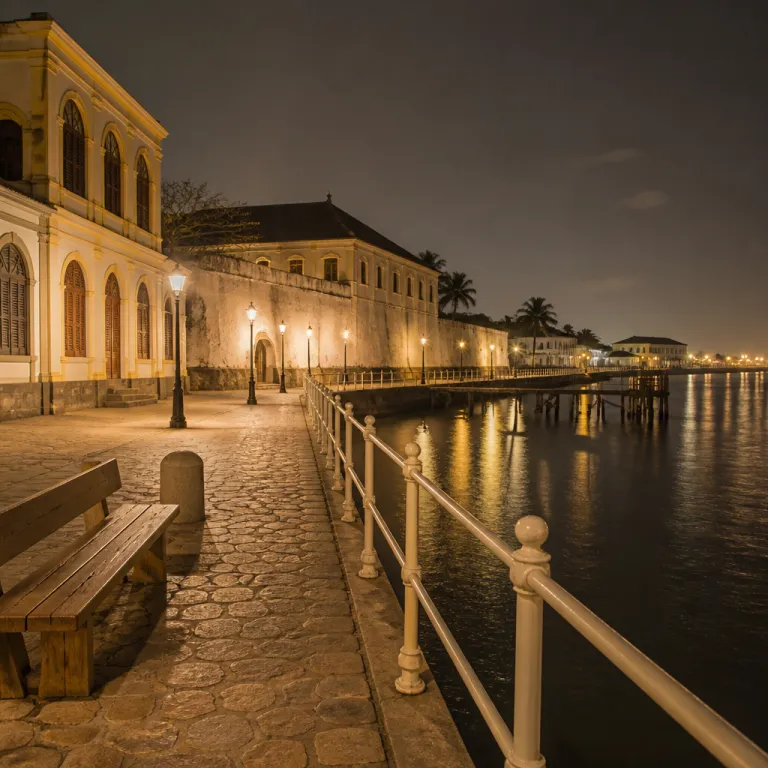
Once the museum closes and the day heat softens, the fort’s surroundings become the stage for the most memorable part of a fort zeelandia paramaribo visit. Officially, Fort Zeelandia itself is not open in the evening, and the Surinaams Museum confirms that regular visiting hours end in the early afternoon rather than at night. You are not here for inside fort access after dark; you are here for the river walk, the illuminated colonial facades, and the way Paramaribo Suriname exhales once the sun drops behind the palms.
Start at the fort’s outer ramparts and look back to view Suriname’s capital framed by the Suriname River, with the Waterkant embankment stretching north. The riverfront is where Dutch merchants once watched ships arrive, and where today local families stroll, teenagers gather at baka foto (a popular riverside photo spot; confirm the exact location with a local guide or hotel staff) for selfies, and solo travelers blend into the easy evening flow. As you walk, you pass colonial architecture in various states of restoration, from stately wooden houses to government buildings that still carry the geometry of Suriname colonial planning.
The circuit continues past the main river walk into the Palmentuin, the palm garden that sits just behind the presidential palace and offers a surprising pocket of quiet in the city center. Many travelers combine this with a broader city tour or a more focused tour Paramaribo experience earlier in the day, then return alone at dusk for a slower, more reflective loop. Compared with daytime guided tours, the evening walk feels less like a checklist of places and more like a private reading of Paramaribo’s layered history, with the Suriname River as your constant reference line.
Weight of memory: December Murders, solo reflection, and respectful travel
Any honest fort zeelandia paramaribo visit must acknowledge that this fort is not only a picturesque colonial site but also a place of trauma. On the night of 7–8 December 1982, fifteen prominent critics of the then-military regime were arrested, brought to Fort Zeelandia, and killed in what became known as the December Murders. Independent investigations, court proceedings, and human rights organisations have since documented these events in detail, and reputable historical sources, including international human-rights reports and Surinamese legal records, remain the best place to explore the full legal and political context.
Luxury travelers sometimes arrive expecting only a charming colonial fort and a photogenic view Suriname moment, then realise that the narrative here is far more complex. The museum addresses the colonial period and the broader arc of Suriname colonial governance, yet the emotional impact of the December Murders is often processed outside, on the ramparts, rather than inside the galleries. This is where a well briefed local guide or a carefully chosen audio guide can help you read Fort Zeelandia with the nuance it deserves, especially if you are traveling alone and want context without sensationalism.
Respectful travel here means giving yourself time, not rushing from one Instagram frame at baka foto to the next stop on a city tour or a transfer to Bigi Pan or Brownsberg. Many solo travelers choose to sit on a bench facing the Suriname River, letting the lights of Paramaribo Suriname flicker on while they reflect on what they have just learned. That quiet pause, between the structured narrative of the Zeelandia Museum and the living city around you, is often the most powerful part of the entire evening.
Where to stay, dine, and extend the experience beyond the fort
For travelers using a luxury or premium hotel as their base, the fort zeelandia paramaribo visit becomes the anchor around which an entire evening in the historic center can be planned. Many of the best properties sit within a short taxi ride of the fort, some in restored colonial architecture and others in contemporary towers overlooking the Suriname River. When you book, ask the concierge about transfer times, safety tips for walking back from the riverfront, and whether any local guided tours can be arranged to align with museum hours.
After your river walk, you will want a dinner that matches the mood of the evening, and Paramaribo Suriname delivers with a mix of Surinamese, Javanese, Hindustani, and Creole kitchens. Choose a restaurant near Waterkant or in the historic center so you can move easily from the ramparts to your table, still carrying the river breeze on your clothes. Solo travelers often prefer intimate dining rooms where staff are used to international travel guests, and where you can quietly read about Suriname colonial history on your phone between courses without feeling rushed.
If your itinerary includes nature extensions, the fort’s narrative pairs well with a later trip to Brownsberg Nature Park, where a canopy trail and birding routes show how the interior of Suriname balances the coastal colonial story, and you can find a detailed guide to that experience on a dedicated Brownsberg article. Many visitors also combine Paramaribo with wetlands like Bigi Pan, using the city as a comfortable base with reliable service standards and easy access to cultural places. In that context, Fort Zeelandia, the Zeelandia Museum, and the evening river walk become your essential first chapter in understanding Suriname before you head upriver or into the forest.
FAQ
Is Fort Zeelandia open in the evening for visitors ?
Fort Zeelandia itself and the Surinaams Museum close in the early afternoon, so you cannot enter inside fort spaces after that time. The official guidance from the museum and local tourism offices is that regular visiting hours end during the day rather than in the evening, though you should always verify current hours with the museum or your hotel. You can still walk around the outer ramparts and along the riverfront in the evening, which is when the surrounding colonial architecture feels most atmospheric.
Are there official guided tours at night around the fort and river walk ?
There are currently no official evening guided tours operating inside Fort Zeelandia or the museum, and formal guided tours generally take place during daytime hours. Some local operators and hotel concierges can arrange private guides for a custom tour Paramaribo experience that ends near the fort before closing time. After dark, most travelers explore the river walk and Palmentuin independently, using daytime context to read the sites they pass.
How much time should I plan for a fort zeelandia paramaribo visit ?
Plan at least one to two hours for the Surinaams Museum and inside fort areas during the day, allowing time to read displays on Surinamese history and the colonial period. Later, reserve another hour for the evening river walk from the fort past Waterkant and into Palmentuin, with pauses for photography and reflection. Luxury travelers often stretch this into a full evening by adding dinner nearby and a slow walk back to their hotel along the Suriname River.
Is the area around Fort Zeelandia safe for solo travelers after dark ?
The riverfront around Fort Zeelandia, Waterkant, and Palmentuin is generally considered safe for solo travelers who take normal urban precautions, especially in the early evening when local families are still out. Stick to well lit paths, avoid isolated corners of the park late at night, and use a taxi arranged by your hotel if you are returning after dinner. Many premium hotels in Paramaribo Suriname provide up to date safety advice and can suggest the best times for an evening walk.
How does Fort Zeelandia compare with other heritage places in Suriname ?
Fort Zeelandia is the most concentrated site for understanding Suriname colonial power, the Dutch presence, and the December Murders in one location. Other places, such as plantation ruins along the Suriname River or wooden districts in Paramaribo, extend that story but do not combine museum, river views, and political history as tightly as this fort. For a first time visitor, a fort zeelandia paramaribo visit offers the best single starting point before exploring wider heritage routes or nature destinations like Brownsberg or Bigi Pan.