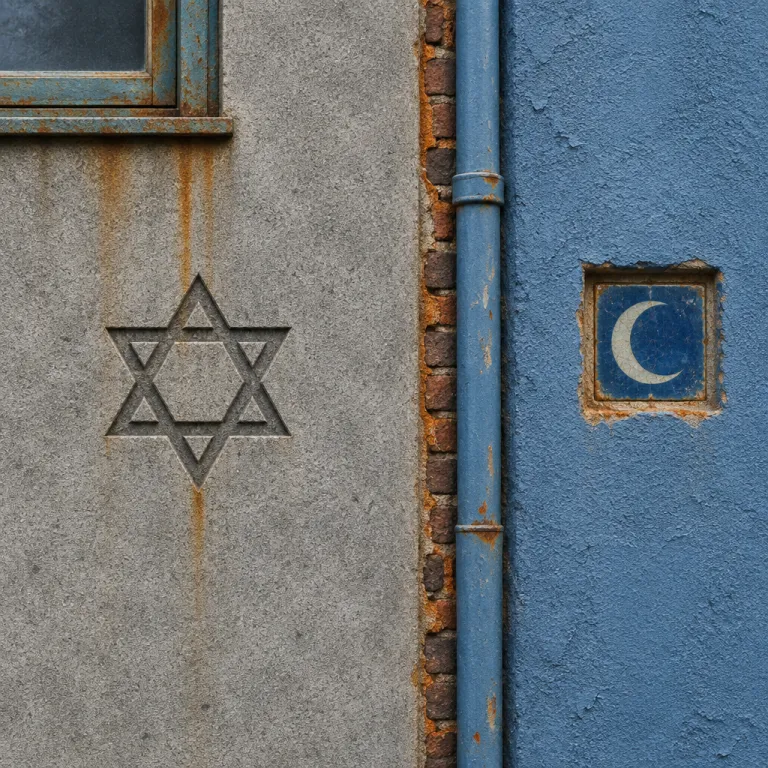
Neveh Shalom synagogue Paramaribo and its quiet, daily coexistence
On Keizerstraat in Paramaribo Suriname, two houses of worship share a boundary and a story. The neveh shalom synagogue Paramaribo stands beside the Ahmadiyya Anjuman Isha’at Islam mosque, and the shared wall feels less like a symbol than a routine fact of life. For a solo traveller walking this south side of the historic centro, the calm between synagogue and mosque is almost disarming.
The Neoclassical façade of the neveh shalom synagogue Paramaribo faces the street with white columns and a measured, almost Dutch restraint. This shalom synagogue is part of a layered Jewish community history in Suriname, where Sephardi Jews acquired the lot in the early eighteenth century and the first synagogue built here anchored urban life after Jodensavanne declined. When you stand on Keizerstraat, you are not just looking at one synagogue Paramaribo offers, but at a crossroads where Jews, Muslims and Christians have long shared the same compact place.
On one side, the mosque Keizerstraat rises with its minarets and palm trees, while on the other side the neveh shalom complex opens to a courtyard of sand and shade. The proximity of synagogues and mosques in Paramaribo Surinam is often photographed, yet residents treat it as ordinary, part of a Suriname Dutch colonial grid that adapted to a South America reality of plural faiths. For the suriname Jewish community, this address on Keizerstraat is both a spiritual home and a reminder that heritage in Surinam is lived shoulder to shoulder.
Luxury travellers sometimes arrive with a short description in mind, expecting a quick snapshot of the synagogue and the mosque. Stay longer than a few minutes and you notice how the Jewish community and Muslim worshippers greet each other, how a group Jews passes a family in traditional dress without ceremony. This is where the neveh shalom synagogue Paramaribo stops being a line in a guidebook and becomes a lived neighbourhood, one that rewards slow walking and attentive looking.
Inside Neveh Shalom: sand floors, Hebrew echoes and a small museum
If the gates are open and no service is underway, visitors are sometimes welcomed into the neveh shalom synagogue Paramaribo interior. Policies can change, so you should always check locally, dress modestly and avoid visiting during a saturday morning service when the Jewish community gathers to practice Judaism. When access is possible, the transition from the bright Keizerstraat pavement to the cool, sand covered floor feels almost cinematic.
The sanctuary of this shalom synagogue is a study in Suriname Dutch and Sephardi aesthetics, with wooden galleries, chandeliers and an aron kodesh that anchors the far wall. Hebrew inscriptions frame the aron kodesh, and the benches carry the patina of generations of suriname Jewish families who came here from Jodensavanne and other settlements in South America. You sense how the synagogue built on this site allowed Jews to move from plantation riverbanks into the urban fabric of Paramaribo Suriname while still maintaining their heritage.
On some visits, a small museum style display is open in one of the side rooms, offering a short description of the neveh shalom story. Here you may see photographs of earlier synagogues, ritual objects linked to Zedek Shalom and Neve Shalom congregations, and documents that trace how orthodox liberal currents coexisted within the same community. The exhibits quietly explain how a group Jews navigated Dutch colonial law, Surinam trade networks and the wider currents of South America.
From the women’s gallery, you can look across the courtyard wall toward the mosque Keizerstraat, and the view underlines how close these two places of worship really are. The neveh shalom synagogue Paramaribo is not a museum piece, though, but an active synagogue where people still practice Judaism, celebrate life cycle events and maintain a rhythm of saturday morning prayers. For a traveller staying in a refined hotel within walking distance, this lived continuity is what makes Keizerstraat more compelling than any polished heritage centre.
To choose a stay that matches this atmosphere, focus on historic core properties where you can walk from your room to the synagogue Paramaribo district in under fifteen minutes. Our detailed guide to where heritage actually sits in Paramaribo’s luxury map helps you understand which addresses keep you close to Keizerstraat without sacrificing comfort. Being based nearby means you can return at different times of day, watching how light, traffic and worship patterns reshape the same place.
The mosque next door and Suriname’s lived pluralism
Step back onto Keizerstraat and the transition from the neveh shalom synagogue Paramaribo to the mosque Keizerstraat is just a few metres. The Ahmadiyya Anjuman Isha’at Islam mosque, completed on this site in the late twentieth century, rises with clean lines and a generous courtyard that often fills with worshippers during major prayers. From the street, the call to prayer and the quieter rhythms of synagogue services sometimes overlap, creating a soundscape that captures Suriname’s pluralism better than any slogan.
Locals will tell you that this side by side arrangement is not staged harmony but simply how Paramaribo Surinam works. The Jewish community, Muslim congregants and Christian neighbours share the same sidewalks, the same food stalls and the same humid air rolling in from the south bank of the Suriname River. For a solo traveller, it is striking how unremarkable this coexistence feels to residents, even as it fascinates visitors from elsewhere in South America and beyond.
From a heritage perspective, the neveh shalom synagogue Paramaribo and the mosque form a single urban ensemble, layered onto a Dutch colonial street plan that once served merchants, planters and mariners. Today, the people who practice Judaism here might work in finance, education or government, while those attending prayers next door might run shops or drive taxis. The shared wall is less a boundary than a reminder that in Surinam, faith communities have long adapted to each other’s presence.
As daylight softens, you can extend your walk from Keizerstraat toward the riverfront and Fort Zeelandia, linking religious heritage with colonial history. The evening route described in our piece on Fort Zeelandia after dark and the river walk pairs well with an earlier visit to the synagogue and mosque, giving your day a coherent narrative arc. You move from the intimate scale of neveh shalom and the mosque Keizerstraat to the broader story of Suriname Dutch rule, resistance and independence era memory.
Turning Keizerstraat into a half day walk for solo travellers
Start your neveh shalom synagogue Paramaribo walk in the late morning, when the light is soft and the heat still manageable. From a hotel in the historic centro, you can reach Keizerstraat on foot in around ten to fifteen minutes, passing wooden townhouses that hint at the same Suriname Dutch heritage that shaped the synagogue built here. Pause first at the street corner to take in the full view of the shalom synagogue and the mosque Keizerstraat before stepping closer.
After exploring the neveh shalom courtyard and, if appropriate, the interior, continue along Keizerstraat toward the market area where Paramaribo Suriname feels most alive. You will pass shops run by Hindustani, Javanese and Creole families, a reminder that the Jewish community is one thread in a wider Surinam tapestry. Street food stalls on this side of town offer roti, nasi and snacks that reflect migration from across South America and Asia, and they make an easy lunch stop for a solo explorer.
In the afternoon, circle back via nearby synagogues and churches, tracing how different faiths clustered within walking distance of the neveh shalom synagogue Paramaribo. While Neve Shalom and Zedek Shalom once referred to distinct congregations, today the emphasis is on a unified suriname Jewish presence that balances orthodox liberal practices under one institutional umbrella. You may hear Hebrew phrases in conversation, see schoolchildren in uniforms and notice how easily a group Jews blends into the mixed crowd.
From here, you can either return to your hotel for a rest or continue toward the riverfront, depending on the weather and your energy. The key is to keep the pace slow enough that the everyday choreography between synagogue, mosque and street life has time to register. This is not a checklist walk but a way to read Paramaribo Surinam through one carefully chosen place and its neighbours.
If you prefer structured planning, our broader guide to where to stay in Suriname as a solo traveller outlines how to link Keizerstraat with river trips, rainforest lodges and other cultural stops. Using that as a framework, you can position neveh shalom and the mosque Keizerstraat as the urban anchor of a longer itinerary. The result is a trip that balances city texture, Jewish heritage and the deep green of the interior.
Choosing a luxury stay that matches Keizerstraat’s layered heritage
For travellers using a premium hotel booking website focused on Suriname, the neveh shalom synagogue Paramaribo should be more than a pin on a map. Where you sleep shapes how you experience this part of the city, especially if you want to walk Keizerstraat at different hours and feel the shift between weekday bustle and saturday morning quiet. A hotel in the historic core keeps you close enough that the synagogue and mosque become part of your daily rhythm, not a one off excursion.
Look for properties within roughly one kilometre of Keizerstraat, where you can move easily between your lobby, the neveh shalom courtyard and the riverfront without relying on taxis. Many of these addresses occupy restored wooden buildings that echo the Suriname Dutch architecture of the synagogue built on this site, though with contemporary comforts like strong air conditioning and reliable Wi Fi. From a balcony or shaded terrace, you can plan a morning visit to the shalom synagogue, an afternoon coffee in the centro and an evening walk toward Fort Zeelandia.
When reading hotel descriptions, pay attention to how they reference local heritage and the surrounding community. A property that mentions ties to the suriname Jewish story, partnerships with guides who understand Hebrew liturgy or links to cultural institutions often signals deeper engagement with place. This matters if you want your stay to support the same plural, respectful ethos that allows synagogues, mosques and churches to share such tight urban quarters.
For travellers interested in the broader history of Jodensavanne and the migration of Jews from plantation settlements to Paramaribo Suriname, some hotels can arrange specialist tours. These excursions trace how a group Jews moved from riverside cemeteries and ruined synagogues in the forest to urban congregations like Neve Shalom and Zedek Shalom, where orthodox liberal practices evolved in response to modern life. Returning to your hotel after such a day, the view of the neveh shalom synagogue Paramaribo and the mosque Keizerstraat feels richer, layered with context rather than just aesthetics.
Over time, this kind of stay turns Keizerstraat from a single stop into a reference point for understanding Surinam as a whole. You begin to see how the Jewish community, Muslim neighbours and other residents have shaped a South America capital that quietly defies easy categories. That is the promise of a carefully chosen hotel near neveh shalom : not just comfort, but proximity to a place where heritage, faith and everyday life share the same narrow street.
FAQ
Can visitors enter the Neveh Shalom synagogue in Paramaribo ?
Access to the neveh shalom synagogue Paramaribo can vary, and visitors should always check locally before planning an interior visit. When entry is allowed, modest dress is expected, and photography rules may be explained by community representatives on site. It is respectful to avoid visiting during a saturday morning service or major holidays, when the Jewish community is focused on prayer.
How close are the synagogue and the mosque on Keizerstraat ?
The neveh shalom synagogue Paramaribo and the mosque Keizerstraat stand directly beside each other, sharing a boundary wall on the same side of the street. From the pavement, you can see both façades within a few steps, making it easy to appreciate their proximity. This adjacency has become a widely cited example of Suriname’s religious coexistence in South America.
Where should I stay to explore Keizerstraat on foot ?
To explore the neveh shalom synagogue Paramaribo and the surrounding centro on foot, choose a hotel in the historic core within about one kilometre of Keizerstraat. This location lets you walk to the synagogue, the mosque and the riverfront without relying on taxis, which is ideal for solo travellers. Many luxury and premium properties in this area occupy restored wooden buildings that echo the city’s Suriname Dutch heritage.
Is there a museum linked to Jewish heritage in Paramaribo ?
Within the neveh shalom synagogue Paramaribo complex, visitors may sometimes find a small museum style display that offers a short description of Jewish life in Surinam. Exhibits can include ritual objects, photographs and documents related to Neve Shalom, Zedek Shalom and the wider suriname Jewish story. For a deeper dive into regional history, some guides also connect Keizerstraat visits with trips to Jodensavanne, the former plantation era settlement upriver.
How does Keizerstraat fit into a wider Paramaribo itinerary ?
Keizerstraat, anchored by the neveh shalom synagogue Paramaribo and the mosque Keizerstraat, works well as a half day cultural walk within a longer city stay. You can combine a morning here with an afternoon in the market district and an evening at Fort Zeelandia, creating a coherent narrative of faith, trade and colonial history. Staying in a nearby hotel makes it easy to revisit the area at different times of day, which reveals new layers of everyday life.
Sources
Jewish Historical Museum (Amsterdam)
United States Holocaust Memorial Museum
Encyclopaedia Judaica